How to Revive Dead Leads (Without Buying a Single New One)
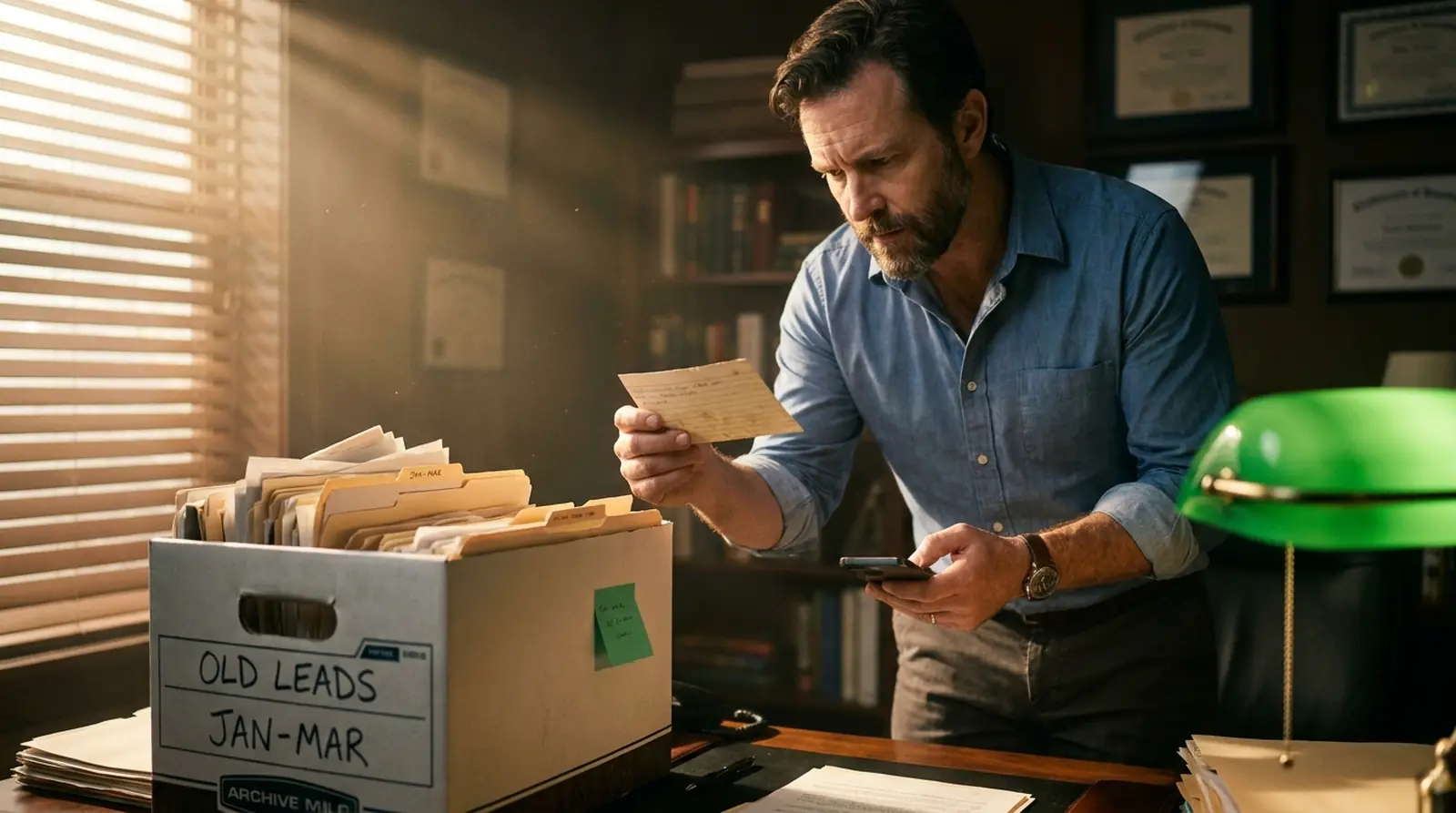
The leads you already paid for are still sitting there. Most of them are not dead.
You paid for those leads. They filled in a form, took a call, or asked for a price. Then they went quiet. Now they sit in your CRM like a graveyard, and every one of them cost you money.
Here is the good news. Most of those leads are not dead. They are just under-followed-up. Reviving them is far cheaper than buying new ones, and you can start today with the list you already own. This is the full play: what to do first, what to say, how often to follow up, and the mistakes that keep leads cold.
Your dead leads are not dead
A lead going quiet feels like a "no." It usually is not. People get busy. They forget. The timing was off. A budget froze and then thawed three months later. None of that means they stopped needing what you sell.
The real gap is on the selling side. Most reps quit far too early.
Read that again. Four out of five sales come after the fifth touch. Almost half of sellers stop after one. That gap is your dead-lead pile. It is not a dead pile. It is an unworked one. The money is already in your CRM. You just have to go get it.
Why leads go cold in the first place
Three things kill most leads, and none of them are "the lead was bad."
- Slow first response. Someone raises their hand, and nobody calls for hours or days. By then they have moved on, forgotten, or called a competitor who picked up faster.
- One-and-done follow-up. A rep sends one email, hears nothing, and marks the lead dead. That is not follow-up. That is a single knock on a door, once, then walking away.
- No system. Follow-up lives in someone's head and a sticky note. Memory loses. The lead slips through the cracks and stays there.
Fix those three, and "dead" leads start answering again. The rest of this guide shows you how.
Start with the right leads, not all of them
Do not blast your whole list at once. Sort it first. Some cold leads are far warmer than others, and working them in the right order gets you quick wins early.
- Newest cold leads first. A lead that went quiet last month remembers you. A lead from two years ago barely does. Work the recent ones first.
- Leads that showed real intent. Anyone who asked for a price, booked a call, or started a trial and never finished. They wanted it once. That want rarely vanishes.
- Leads that ghosted mid-conversation. The ones who replied a few times and then went dark are gold. Something interrupted them, not a lack of interest.
Rank the list this way and you spend your energy where it pays back fastest.
What to actually say: a message that reopens the door
Reviving is not nagging. It is reopening the conversation in a way that is easy to say yes to. The worst thing you can send is "just checking in." It gives the reader nothing to react to. Give them a real reason and one easy next step.
Here is a simple opener that works. Short, human, honest.
Hi Sam,
We spoke back in March about speeding up your lead response. The timing may have been off then, so no worries if it was.
Quick question: is getting back to new leads faster still something you are trying to fix? If yes, I can send a two-minute breakdown of what usually moves the needle. If not, I will leave you be.
Bruce
Why it works: it names when you last spoke, it gives them an easy out, and it asks one yes-or-no question they can answer in five seconds. No pressure, no wall of text, no "just checking in."
The follow-up cadence that revives leads
One message rarely does it. Remember, most sales come after the fifth touch. So plan a short sequence across a few channels, spaced over days, not one email fired into the void.
- Day 1, text or email. The opener above. Short and human.
- Day 3, a different angle. Share something useful. A quick tip, a short case, a number that matters to them. No ask, just value.
- Day 5, a quick call. Now pick up the phone. You have warmed them with two touches. A call on day five lands very differently than a cold call on day one.
- Day 8, the soft close. "Still worth a chat, or should I close your file?" A gentle deadline often gets the reply that four polite nudges could not.
- Day 14, the breakup. One last honest message. "I will stop here unless you say otherwise." Breakup notes get more replies than almost anything else.
Mix the channels. Text, email, and a call together beat five emails. And the moment someone replies or clicks, jump on it. That leads to the next point.
Speed still matters, even on old leads
The second a cold lead shows a flicker of interest, they are hot again. And the clock restarts. How fast you respond to that flicker decides whether you close it or lose it a second time.
So when a revived lead opens your email or replies to your text, that is your five-minute window all over again. Do not let it sit in an inbox until tomorrow. Call while the interest is live.
Three mistakes that keep leads dead
- "Just checking in." It asks for nothing and offers nothing. Every message needs a reason and a clear next step.
- Giving up after one reply-free message. Silence is not a no. It is usually bad timing. The fifth touch is where the sale hides.
- Being slow when they finally bite. You did the hard work to warm them up, then took a day to reply. That undoes everything. Speed on the re-engage is the whole game.
How to do this without doing it by hand
The play above works. The problem is running it across hundreds of old leads, every week, forever. That is where it falls apart. People get busy, the sequence stops, and the pile goes cold again.
This is the exact job GoStartr was built for. It sits on top of the CRM you already use, so nothing gets ripped out.
- Email campaigns and sequences run the multi-touch reactivation for you, written to sound like your best rep, not a robot.
- Abby, the AI voice agent, answers and calls leads in under a minute and qualifies them, so the second a cold lead warms up, someone is on it fast.
- Instant plus human follow-up keeps the chase going until the lead replies, then routes the real ones to a person to close.
- The pipeline scores leads on its own and suggests the next step, so warm ones never slip through again.
You are not buying new leads. You are working the ones you already paid for, on a system that does not forget and does not get tired.
Quick math on why this pays
Say you have 500 old leads sitting cold. You revive just 3% of them. That is 15 conversations you were never going to have. If your average sale is worth $2,000, and you close a third of those 15, that is 5 sales, or $10,000, from a list you already own. No ad spend. No new lead cost. Just follow-up that actually happens.
Bump the revival rate to 5%, or the close rate up a notch, and the number climbs fast. That is the size of the pile most businesses are sitting on and ignoring. Want your own number? Run it through the calculator below.
See what slow follow-up is costing you
Use the free Speed to Lead calculator to put a real dollar figure on the leads slipping through. Takes 30 seconds.
Calculate what you're losingFAQ
How old is too old for a lead?
Rarely as old as you think. Leads from the last year are fair game. The newest cold ones answer best, but even year-old leads reply when you give them a real reason and make it easy. Older than that, expect lower reply rates, but a breakup-style message can still surprise you.
What do I say in the first message?
Keep it short and honest. Remind them who you are, name what you talked about, and ask one easy yes-or-no question. Skip "just checking in." Use the template above as a starting point and make it sound like you.
How many times should I follow up?
More than once, for sure. Most sales come after the fifth touch, so plan a few spaced-out messages across text, email, and a call. A five-touch sequence over about two weeks beats a single email every time.
Is reviving dead leads spammy?
Not if you are useful and easy to opt out of. You are reaching people who already raised their hand. A helpful, human nudge with a clear exit is not spam. Ten identical emails in a day is.
Should I call or email?
Both. Start with a text or email to warm them, then call once they have seen a message or two. A call on day five, after two soft touches, connects far better than a cold call on day one.